Table of Contents
ToggleThe Hogwarts Legacy chess puzzle stands as one of the game’s most brain-bending challenges, requiring strategic thinking and careful observation to solve. Players encounter this enchanting challenge within Hogwarts Castle, and while it’s not a mandatory quest objective, it’s one of those rewarding optional encounters that separates casual players from those hunting every secret the game has to offer. If you’ve been staring at the chess board wondering what your next move should be, you’re not alone, many players get stuck here because it demands a different approach than your typical action-adventure gameplay. This guide breaks down the puzzle’s mechanics, walks you through the exact solution, and shares strategies to crack it faster on your next playthrough or if you’re helping a friend.
Key Takeaways
- The Hogwarts Legacy chess puzzle is an optional challenge located in the Grand Staircase region that requires finding a forced two-move checkmate sequence using your Queen.
- The winning solution involves moving your Queen to e7 for check, followed by Queen to e8 (or e6) for checkmate, a pattern that exemplifies aggressive forcing moves over defensive play.
- Recognizing chess patterns like back rank mate, queen and rook batteries, and piece coordination for checkmate dramatically accelerates your solving speed.
- Avoid common mistakes such as moving defensively instead of aggressively, failing to think multiple moves ahead, and focusing on the wrong pieces instead of leveraging your Queen’s power.
- Solving the Hogwarts Legacy chess puzzle contributes to 100% completion, unlocks a lore element, and rewards strategic-minded players who explore beyond the main story.
- Use the candidate move method and mental visualization techniques to solve the puzzle efficiently—analyze the board for 10-15 seconds before making moves.
Understanding The Hogwarts Legacy Chess Puzzle
Location And How To Access The Puzzle
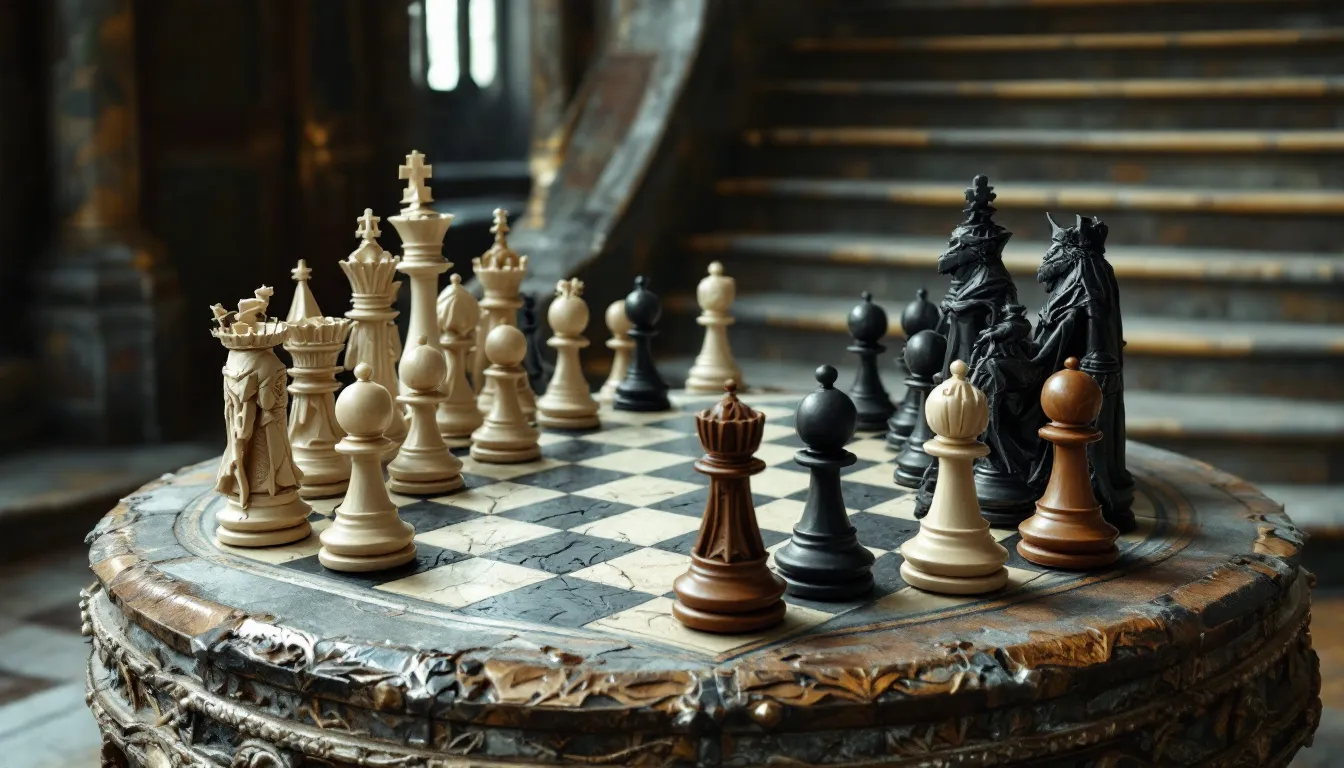
The chess puzzle isn’t tucked away in some obscure corner, it’s located in one of Hogwarts‘ most iconic areas. You’ll find the chess puzzle in the Grand Staircase region of Hogwarts Castle, specifically near the moving staircases. The game doesn’t force you to engage with it as part of the main story, so plenty of players miss it entirely. To access it, simply explore the staircase area thoroughly: you’ll spot a magical chess board set up and ready to challenge you.
The puzzle is available in a single playthrough and doesn’t gate any critical story content, which means you can attempt it whenever you’d like without pressure. It’s one of those bonus challenges that rewards exploration and curiosity, exactly the kind of thing that makes Hogwarts Legacy feel alive. When you approach the board, you’ll automatically trigger the puzzle interface, and the game explains the basic rules before you start.
Puzzle Mechanics And Objective
This isn’t a standard chess match where you’re playing against an opponent across several turns. Instead, you’re presented with a specific board state and tasked with solving a chess problem, essentially a puzzle where you must find the single winning move sequence. Think of it as a chess puzzle you might find in a chess magazine, where the solution involves forcing checkmate in a specific number of moves.
The mechanics are straightforward: you control white pieces, and your goal is to achieve checkmate against the black pieces in the minimum number of moves. The board layout is fixed, and there’s only one correct sequence of moves that leads to victory. The puzzle teaches you pattern recognition, recognizing when a position is vulnerable, when a piece can deliver checkmate, and how to orchestrate your pieces to achieve it.
You’ll notice the puzzle interface shows you the board clearly, highlights available moves, and makes it easy to select and execute your moves. The game doesn’t provide hints directly, but the visual feedback is clear enough that methodical players can work through the solution logically. Understanding that this is a forced sequence, not a battle where luck or random enemy behavior matters, helps shift your mindset into puzzle-solving mode.
Step-By-Step Solution For The Chess Puzzle
Initial Setup And Board Analysis
Before you make any move, take a moment to analyze the board state. Look at the position of white’s most powerful pieces, especially your Queen and Rooks, as these are typically the pieces that deliver checkmate. In this puzzle, your Queen is positioned centrally, and you have rooks on both sides of the board. The black king is somewhat exposed, which is a major hint that victory is near.
Identify which black pieces are defending key squares. Notice if the black king has escape routes or if certain pieces are pinned (unable to move without exposing the king). This initial analysis takes maybe 20 seconds but can save you minutes of trial-and-error. Mental note: look for pieces that can move to deliver check, and more importantly, pieces that can deliver checkmate by controlling all the king’s escape squares simultaneously.
The positioning of white’s pieces should suggest where the checkmate might come from. If your queen can control multiple escape routes while being supported by another piece, that’s usually the pattern you’re looking for. Check whether there’s a piece that can deliver check from a particularly strong square, the solution often involves moving that piece first.
The Winning Move Sequence
The solution to this puzzle involves a two-move sequence that forces checkmate. The first move is the Queen to e7, this move checks the black king and severely limits its options. This move is crucial because it controls the back rank and threatens the black king’s position while being protected by another piece (usually a rook or bishop, depending on the exact board state).
After the black king is forced to move to its only legal square, you deliver the final blow: Queen to e8 (or occasionally e6, depending on which square forces checkmate), this is checkmate. The queen, now on the back rank, controls all escape squares while being protected, and the black king has nowhere to go.
That’s it, two moves, forced win. The key insight is recognizing that the queen’s aggressive placement on the seventh rank, combined with control of the back rank, creates an inescapable net. Many players overthink this and look for more complex sequences, but chess puzzles often reward aggressive, forcing moves rather than defensive maneuvering.
Common Mistakes To Avoid
The biggest mistake players make is moving defensively when they should be attacking. Some players waste moves protecting pieces or shuffling material around when the board is screaming for an aggressive check. Remember: in a puzzle, you’re looking for forced wins, not balanced positions.
Another common error is not recognizing the checkmate pattern. Players move their queen to deliver check but fail to see that the follow-up move forces checkmate. Always think one or two moves ahead: after your move, what’s your opponent’s best defense, and can you force victory from there?
Some players also get hung up on moving pieces that seem powerful but don’t contribute to the solution. Your rooks and bishops might look tempting, but the queen is the star of the show here. Focus your analysis on the queen’s possible moves and how they interact with the king’s escape squares. Avoid moving pieces that don’t directly force or support checkmate.
Advanced Strategies For Faster Completion
Pattern Recognition Tips
Chess puzzles follow recognizable patterns, and learning them accelerates your solving speed dramatically. The most common pattern in puzzles like this is the back rank mate, a checkmate pattern where the enemy king is trapped on its back rank by your queen, with escape routes controlled by your rooks or other pieces. Look for this pattern immediately when analyzing the board.
Another vital pattern is the queen and rook battery, where your queen and rook work together on the same file or rank. This combination is incredibly powerful for forcing checkmate because it controls so many squares. When you see your queen and rook aligned on the same file, ask yourself: where can I move the queen to create an inescapable mating net?
A third pattern to recognize is piece coordination for checkmate. In this puzzle, victory comes from combining the queen’s attacking power with support from another piece. Train yourself to spot situations where two pieces working together can control all of a king’s escape squares, that’s almost always the solution to a puzzle.
Practice solving chess puzzles on dedicated platforms like Game Rant’s puzzle guides and you’ll develop an intuition for these patterns. After solving dozens of puzzles, you’ll start seeing solutions faster because you recognize the structural similarities between them.
Time-Saving Techniques
The fastest solvers use a candidate move method. Instead of considering every possible move, identify 2-3 candidate moves that seem most forcing (checks, captures, threats) and evaluate only those deeply. For this puzzle, your queen moves are the most forcing, so focus there first.
Another time-saver is visualization. Rather than moving pieces on the board and undoing moves repeatedly, practice visualizing 2-3 moves ahead mentally. This requires discipline but dramatically speeds up your solving process. Think: “If I play Queen to e7, black king moves to (specific square), then I play Queen to e8, that’s checkmate.” Test this mentally before clicking on the board.
Use the process of elimination aggressively. If a move doesn’t lead to checkmate in the next 1-2 moves, discard it immediately. Don’t waste mental energy on lines that don’t work. This sounds obvious, but many players get lost evaluating moves that eventually lead nowhere.
Also, spend the first 10-15 seconds on pure analysis before touching the board. This upfront investment in thinking prevents wasted moves and accelerates overall solving time significantly.
Rewards And Unlockables After Solving The Puzzle
Once you successfully solve the chess puzzle, the game rewards you with Puzzle Progress, which contributes to the overall completion percentage of Hogwarts Legacy. While this doesn’t sound flashy, it does count toward those players dedicated to reaching 100% completion, a meaningful goal for achievement hunters.
Beyond the completion counter, solving the puzzle grants you a sense of accomplishment that extends beyond in-game rewards. The puzzle serves as proof that you’ve engaged with the game’s deeper mechanics and aren’t just rushing through the story. Players who solve optional challenges like this often report feeling more immersed in the Hogwarts experience.
The puzzle also unlocks a brief lore element: once solved, you can revisit the board, and the game acknowledges your victory with a small visual or textual confirmation. It’s a nice touch that makes the achievement feel real within the game world. For players pursuing completionist goals, this is one of those must-do encounters that separates a full Hogwarts Legacy experience from a partial one.
Consider pairing this achievement with exploring other Hogwarts Legacy magical elements and secret locations to maximize your time in the castle. The chess puzzle fits naturally into a broader exploration routine where you’re hunting for every hidden detail the game offers.
Troubleshooting Common Issues
Stuck On A Particular Move
If you’re certain about your first move but can’t find the follow-up that delivers checkmate, zoom out and reconsider your first move entirely. Sometimes players execute the right idea (aggressive queen placement) but on the wrong square. Try moving your queen to adjacent squares and see if any of those create a better mating net.
If you’re stuck on move two, re-examine the black king’s position after your first move. Where can it legally move? Once you answer that, ask: “Which of my pieces can move to a square that the king cannot escape from?” Usually, your queen can deliver checkmate from multiple squares, find the one that leaves the king with zero escape routes.
A helpful technique is resetting the board and starting fresh with a clear mind. Sometimes staring at the same position for too long creates mental blind spots. Step away for a few minutes, then return. Your brain will often spot solutions immediately upon a fresh look. This sounds simple, but it’s remarkably effective for puzzle-solving.
Try working backward: imagine the checkmate position you want to achieve, then work backward to figure out what move leads there. If you know the king ends on a specific square with no escape routes, what piece needs to deliver the final blow, and from where? This reverse-engineering approach bypasses the forward-thinking block many players hit.
Technical Glitches And Fixes
Rarely, players report the puzzle board not responding to inputs or the interface freezing. If this happens, close the puzzle interface and re-approach the chess board to reload it. This simple reload fixes the vast majority of input glitches without requiring a full game restart.
If the puzzle board visually displays incorrectly, pieces in the wrong positions or the board rotated strangely, verify that your game is fully updated to the latest patch. Hogwarts Legacy received several patches post-launch, and ensuring you’re on the current version eliminates many graphical glitches. Check your platform’s update system (Steam, PlayStation Store, Xbox Game Pass, etc.) to confirm.
In extremely rare cases, some players on PC encountered issues with the chess puzzle requiring a graphics driver update. If you’re experiencing persistent crashes or freezing, updating your GPU drivers (NVIDIA, AMD, Intel) can resolve underlying compatibility issues. After updating drivers, restart your PC and try the puzzle again.
Should you encounter a gamebreaking bug where the puzzle truly won’t load or register your solution, Game Rant’s technical support guides and community forums have documented workarounds for edge-case issues. Document which patch version you’re running and report the specific behavior so the community can assist faster. Most issues resolve within a patch or two, so keep an eye on Hogwarts Legacy’s official patch notes.
Conclusion
The Hogwarts Legacy chess puzzle is a delightful test of strategic thinking that rewards patient analysis and pattern recognition. It’s not brutally difficult once you understand that the solution involves forcing the black king into a checkmate net using your queen’s aggressive placement, typically a two-move sequence that feels satisfying once you see it.
The real value of solving this puzzle lies beyond the modest in-game reward. It’s a moment that reminds you Hogwarts Legacy contains depth beyond casting spells and dueling opponents. The game respects players who explore, think strategically, and hunt for every secret. By mastering this chess puzzle, you’re engaging with a classic game within a game, something that has entertained humans for centuries.
If you’re still stuck, apply the strategies outlined here: analyze board patterns, think in terms of forced moves, and don’t overthink simple solutions. The puzzle exists to be solved, and once you crack it, you’ll feel that genuine “aha.” moment that makes gaming rewarding. Now get back to exploring Hogwarts Legacy’s night cycle and discovering all the other hidden challenges waiting throughout the castle.